Haiyang (Tony) Xin 辛海洋
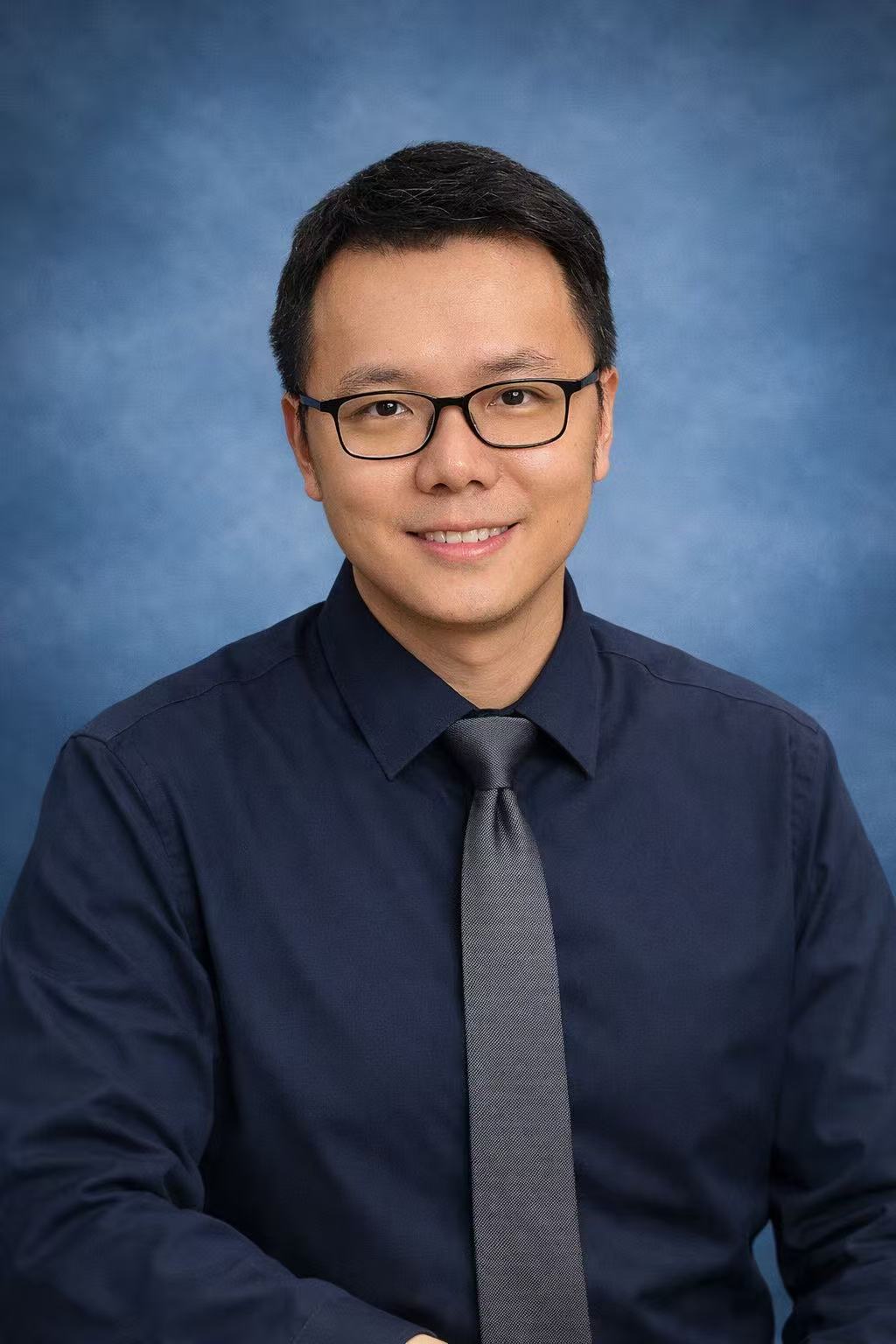
Founder and CEO of COCOROBO, an AI education company based in Hong Kong.
COCOROBO works with 400+ schools in Hong Kong and Macau and 800+ schools across the Greater Bay Area, building and deploying learning systems in real classrooms for over a decade.
His work connects learning sciences, AI, system design, and educational practice.
2016
Founded
1,200+
Schools
5,000+
Teachers
100,000+
Students
Background
Ph.D., CUHK
Information Engineering
Visiting Scholar, MIT
MIT RLE
Founded COCOROBO LTD
Hong Kong
Funded by TSSSU CUHK
Several Investments
Tony received his Ph.D. in Information Engineering from The Chinese University of Hong Kong (2012–2016).
During his doctoral studies, he was a visiting scholar at MIT (2014–2015), where he worked at the MIT Research Laboratory of Electronics (RLE). It was during this time that he first encountered Nicholas Negroponte's Being Digital and his provocative argument that "reinventing the wheel" is essential for education — a view that challenged Tony's instinctive belief in not reinventing the wheel, and opened new ways of thinking about learning through construction.
Tony was deeply inspired by the culture and ideas of the MIT Media Lab. The work of Hiroshi Ishii on tangible interfaces and Neil Gershenfeld's legendary course How to Make (Almost) Anything opened his eyes to a world where making and cross-disciplinary collaboration were central to learning. The influence of then-director Joi Ito and his later book Whiplash — with its core insight that "the only constant is change" — shaped Tony's thinking about how to prepare for an uncertain future.
This experience also awakened a deep interest in the relationship between media, creativity, and education. Tony began actively seeking out artists and creators who pushed the boundaries of technology as a medium of expression — John Maeda, Daito Manabe, teamLab, and even Ryuichi Sakamoto's exploration of Music Plays Images × Images Play Music, as well as Chinese artists Xu Bing and Cai Guoqiang. These encounters prompted him to think beyond specific media toward a broader question: how does the act of creation itself become a pathway for learning?
It was during this period that Tony discovered Seymour Papert's Mindstorms, which finally connected many of his scattered intuitions: objects to think with, learning by doing, and powerful ideas. Papert's vision crystallized a question that would define his career: how can we help children cultivate creativity through technology?
The decision to start a company was also shaped by Peter Thiel's Zero to One, encountered during his time at MIT, and the broader entrepreneurial culture there — the conviction that building a product and harnessing commercial forces could be more transformative than ideas alone.
Learning is not content delivery, but environment design.
Building COCOROBO — A Decade of Practice
With this conviction, Tony founded COCOROBO LTD in 2016, supported by CUHK's PI Centre. From the beginning, COCOROBO was designed to serve STEM education, providing modular open-source hardware (CocoMod) and a visual programming environment (CocoBlockly) to help students make things and solve problems. The pedagogical approach was also inspired by Mitchel Resnick's Lifelong Kindergarten and the 4P framework (Projects, Passion, Peers, Play), which deeply informed how COCOROBO designed its early STEM activities.
Through classroom practice, Tony encountered Project-Based Learning (PBL), which led him to the work of David H. Jonassen. Jonassen became the second major intellectual influence after Papert — his ideas on constructivist learning environments, cognitive tools, and problem solving provided rich theoretical nourishment.
This deepening inquiry gradually shifted COCOROBO's focus from designing STEM tools to supporting the learning process. Tony developed CocoClass as an online learning platform to support STEM activities — reducing teachers' burden in collecting evidence, enabling process-based assessment, and providing cognitive support for student development. As the company grew into AI education (2019), learning platforms (2022), and now AI-native systems (2024), the product ecosystem expanded continuously.
Meanwhile, this journey led him into the broader field of learning sciences.
Learning Sciences and Practice
Two books in particular opened a new world: The Cambridge Handbook of the Learning Sciences and The International Handbook of the Learning Sciences. These works gave Tony a far more comprehensive and deeper understanding of learning — metacognition, self-regulated learning, knowledge building, orchestration, scripting, and design-based research.
Through learning sciences, Tony and his team gained a more comprehensive lens for examining problems they encountered in practice — including issues they had previously overlooked. Problems that once seemed purely technical revealed themselves to be deeply connected to cognition, motivation, and social dynamics. At the same time, the insights gained from real classroom practice deepened their understanding of theory. The relationship became reciprocal: theory illuminated practice, and practice enriched theory.
Tony began consciously using learning science theories to guide product design, and applying Design-Based Research (DBR) methods to analyze outcomes and iterate on systems.
From Practice to Research
Since around 2023, research has been more explicitly integrated into system development. Deployed systems serve as research instruments — to examine how AI mediates teaching and learning, to study how teachers design with AI, and to analyze learning processes as they unfold in real classrooms. Practice generates questions; research informs the next iteration of system design.
Invited Talks
UNESCO Digital Learning Week 2026
From AI Tool Users to AI Agent Creators
UNESCO Headquarters, Paris · 8–11 September 2026
Tony and the CocoRobo team were invited to share their work on teacher-led AI agent design at UNESCO’s Digital Learning Week. The presentation explores how teachers can move from using AI tools to designing pedagogical agents, while retaining professional judgment and agency.
Collaboration
Since 2023, Tony and his team have been consciously collaborating with academic researchers — conducting joint studies, publishing papers, and building bridges between product development and scholarly inquiry. The following are the main partner institutions:
Current Direction
Current work focuses on AI-native learning systems and agentic AI. Since 2023, the rapid development of AIGC has made it clear that AI can no longer be treated simply as a tool. Tony's thinking has evolved through several stages: from exploring how AI can serve student-centered learning, to examining the role of teachers in the process, to investigating the deeper impact of AI on both students and teachers, and ultimately to questioning the human-AI relationship itself — including whether a purely human-centered perspective is sufficient.
This trajectory has led toward posthumanist perspectives, because learning is not only what happens before university — it is lifelong. Designing for the future requires holding both short-term and long-term views simultaneously.
Read more in Thinking